
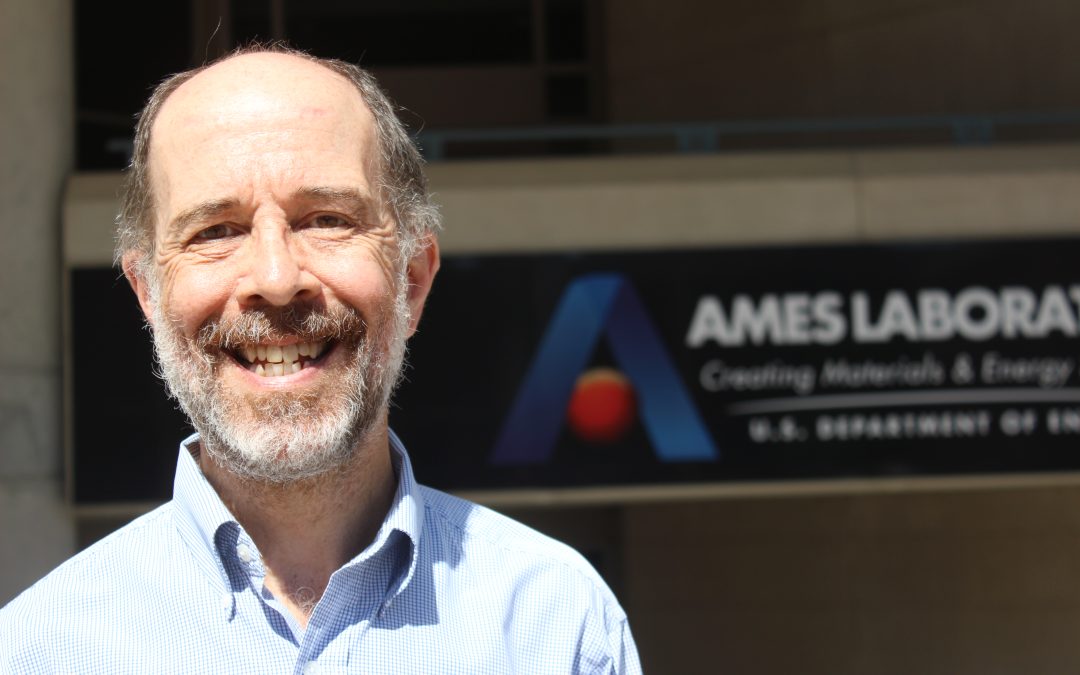
TÍTULO: Cooking, Fishing and Jogging through Phase Space: A Practical Guide to Discovering and Understanding New Materials
ORADOR y FILIACIÓN: Paul C. Canfield, Distinguished Professor, Liberal Arts & Sciences and the Robert Allen Wright Chair in Physics, Senior Physicist, Ames Laboratory, Iowa State University. Profesor invitado por el Programa Maldacena.
RESUMEN:
The design, discovery, characterization and control of novel materials is perhaps the most important research area for humanity as it moves into the 21rst century. A myriad of societal problems concerning energy, clean water and air, and medicine all need to be solved by the discovery of new compounds with dramatically improved, or even new, properties. The search for such materials requires a blending of skills and mindsets that, traditionally, have been segregated into different academic disciplines: physics, chemistry, metallurgy, materials science. In this colloquium I will outline the basic philosophy and techniques that we use to search for novel materials. These include a combination of intuition, experience, compulsive optimism and a desire to share discovery.[1]
In the second half of the lecture, the specific case of superconductivity will be used as an example of one such search. Over the past couple of decades a growing sense of where and even how to search for new superconductors has been developing, with the recent discoveries of MgB2 and the FeAs based materials providing, at least for me, clear guidance. [2]
Stories will be told, jokes will be cracked, slow burn puns will be deployed. Any resemblances to persons living or dead is coincidental.
[1] Paul C. Canfield, Rep. Prog. Phys. 83 [2020] 016501.
[2] Paul C. Canfield, Nature Materials 10 [2011] 259.
MINI BIO:
Paul C. Canfield is an Ames Laboratory Senior Scientist, a Distinguished Professor and the Robert Allen Wright Professor of Physics and Astronomy at Iowa State University. Canfield’s research interests include the design, discovery, growth and characterization of novel electronic and magnetic compounds – often in single crystal form – and the study of their electrical, magnetic and thermal properties. Over the past three decades, he has helped discover, understand, and optimize materials with ferromagnetic and superconducting states as well as more exotic system that have fragile magnetism that can be manipulated so as to shed light on basic questions addressing the very origins of magnetic behavior. Canfield has received numerous awards and citations for his work. In 2020 he was elected to be a member of the American Academy of Arts and Sciences. In 2016, he was awarded the James C. McGroddy Prize for New
Materials by the American Physical Society (APS). In 2015, he received a Humboldt Research Award. In 2014, he was awarded the David Adler Award in the field of Material Physics by the American Physical Society (APS) and was also placed on the Thomson Reuters’ World’s Most Influential Scientific Minds list. In 2011, Canfield received the Department of Energy Ernest Orlando Lawrence Award.
INFORMACIÓN DEL COLOQUIO IB
Viernes 07/08, 14.30hs.
Duración aproximada: 45 min de exposición y luego se habilita un tiempo para preguntas.
LUGAR Y E-LUGAR
Salón de Actos del Instituto Balseiro. Av. Bustillo km 9,5, San Carlos de Bariloche.
Ingreso al CAB con DNI.
El coloquio será grabado y transmitido luego por el canal de YouTube “Instituto Balseiro Coloquios”
Link a listado de coloquios previos, ver aquí.